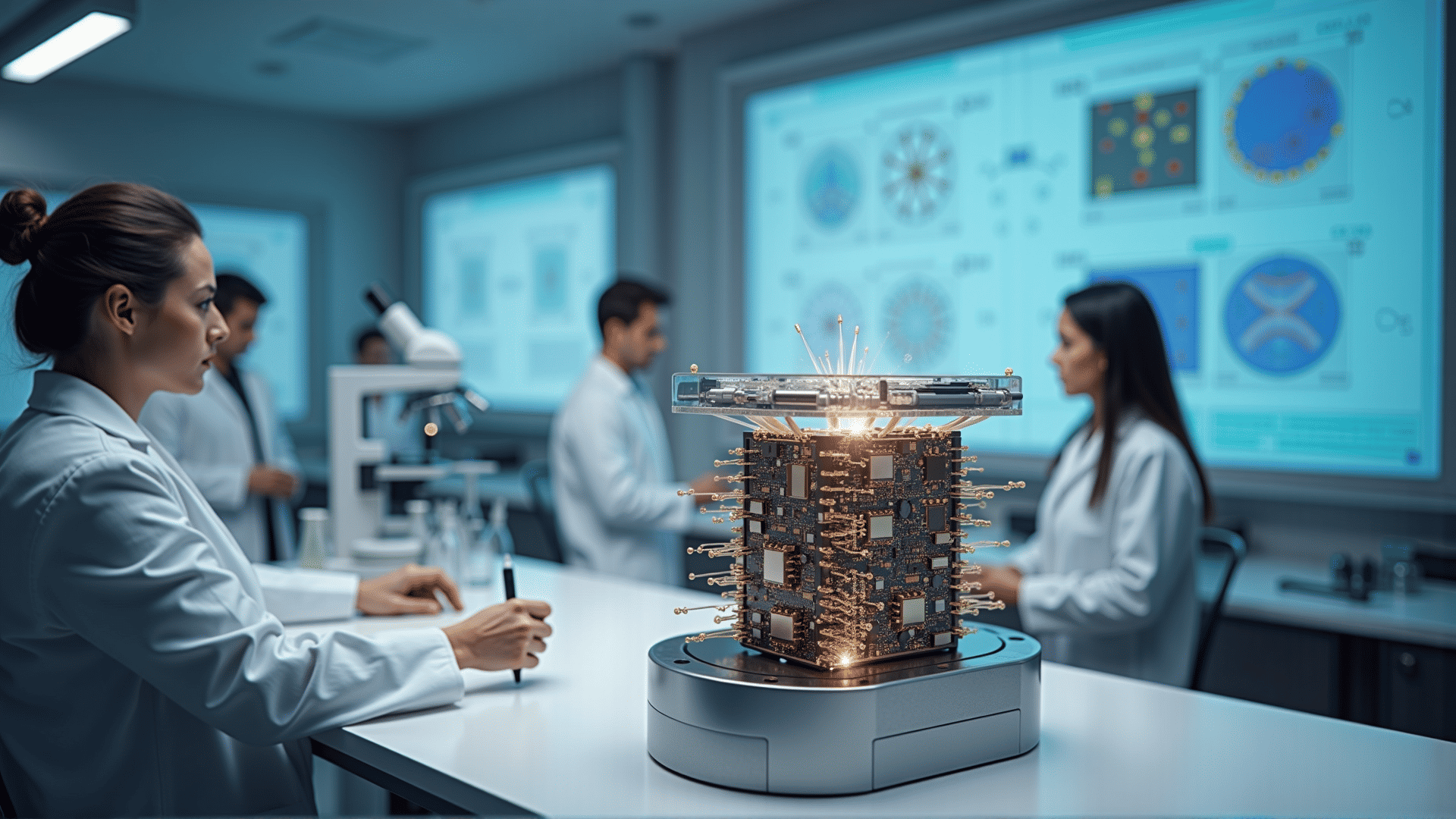
In recent years, quantum sensor technology has emerged as a groundbreaking field, revolutionizing the way we measure phenomena across various domains. This promising technology is rooted in the principles of quantum mechanics, utilizing the peculiar behaviors of quantum systems, such as superposition and entanglement, to enhance measurement precision beyond the capabilities of classical sensors.
The principle of superposition allows quantum sensors to exist in multiple states simultaneously, enabling the capture of vast amounts of information about physical attributes like magnetic fields, time, gravity, and temperature. On the other hand, entanglement, a unique feature where quantum particles become interconnected, further increases measurement accuracy, ensuring that even the slightest change is captured.
One of the most promising applications of quantum sensing is in the realm of timekeeping. Quantum clocks, or optical lattice clocks, are rapidly replacing traditional atomic clocks due to their extraordinary precision. These clocks measure the vibrations of atoms cooled to near absolute zero, achieving precision at levels where they would lose only one second over billions of years. This level of exactitude is pivotal for GPS systems, telecommunications, and scientific research where every fraction of a second counts.
In addition to timekeeping, quantum sensors are redefining navigation systems. Conventional inertial navigation systems drift over time, requiring external calibration. Quantum sensors, however, offer drift-free measurements. By detecting variations in gravitational fields with incredibly high precision, these sensors can determine location and movement without the need for external input, a capability that holds immense potential for aerospace and underwater navigation.
The medical field stands to benefit enormously from quantum sensor technology. Non-invasive biosensors leveraging quantum properties can detect minute variations in biological samples, enabling early disease detection and personalized treatment regimes. For instance, quantum-enhanced MRI machines are being developed to provide higher-resolution imaging and more detailed diagnostics without the high levels of magnetic fields typically required.
Moreover, quantum sensor technology is playing a pivotal role in environmental monitoring. These sensors can detect minute changes in the environment with high fidelity, offering vital data for climate research and ecosystem management. They'll enable the real-time tracking of pollution levels, facilitating timely and effective responses to environmental threats.
Despite the enormous potential, the development of quantum sensor technology is not without challenges. Quantum systems are often delicate and susceptible to external interferences like temperature variations and electromagnetic fields, which can disrupt their functioning. As a result, significant research is devoted to stabilizing and protecting these fragile systems to ensure reliability and applicability in real-world conditions.
Efforts are also underway to miniaturize quantum sensors to create portable devices without sacrificing performance. Success in this area could dramatically broaden the scope of applications, making precision measurement tools available across various industries and even for consumer electronics.
As we continue to explore and innovate in this captivating frontier of science, quantum sensors promise to unlock new horizons in precision measurement, enhancing our understanding of the natural world and sparking yet unseen technological advancements. Their ability to measure the seemingly immeasurable paves the way for not only transformative technological progress but also a profound impact on society and our daily lives.