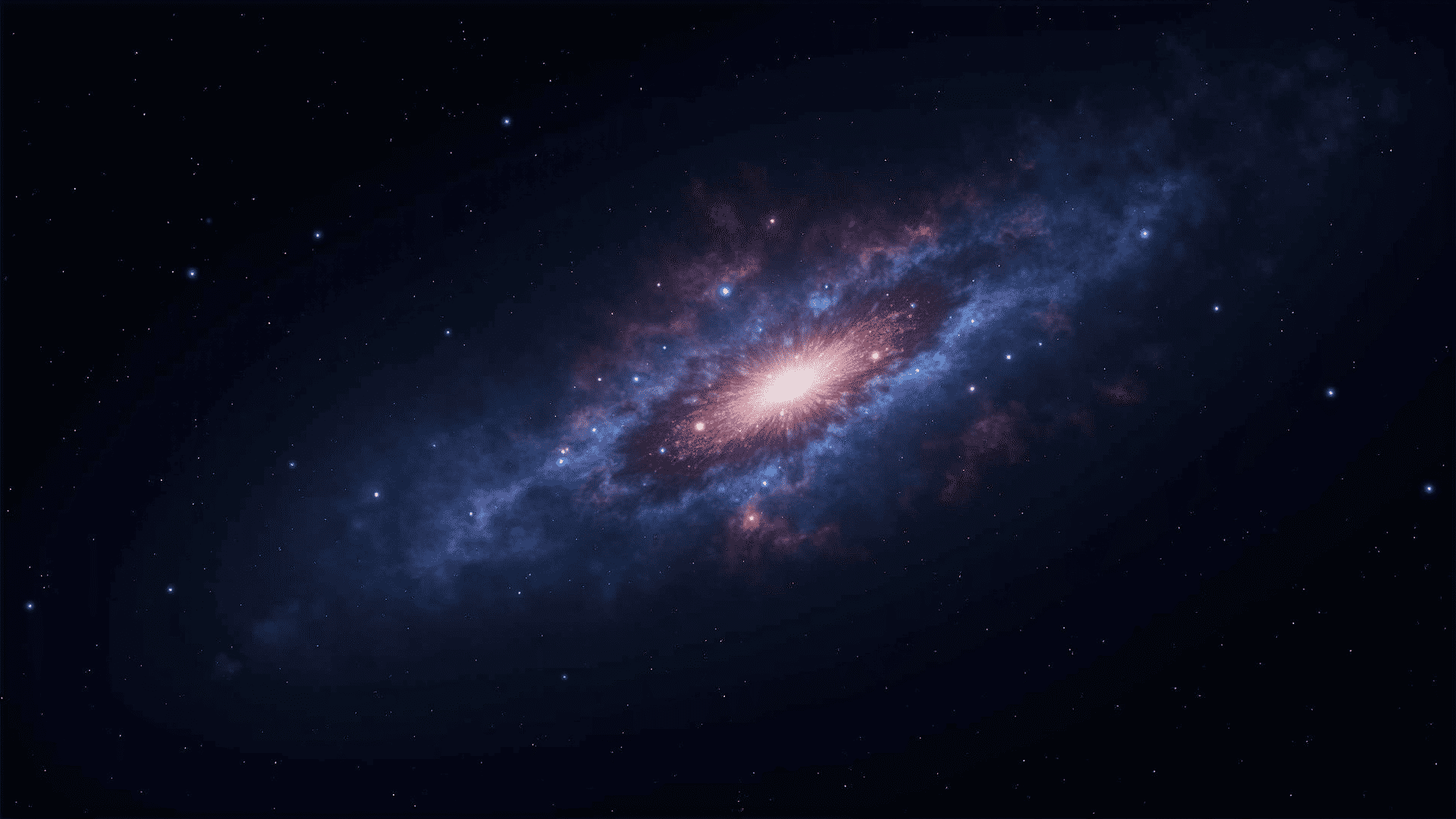
In the expansive tapestry of the universe, there lies an enigmatic substance that has confounded astronomers and physicists for decades: dark matter. Invisible to telescopes yet essential in shaping galaxies and cosmic structures, dark matter constitutes approximately 27% of the universe. Despite its elusive nature, it is essential to understanding the cosmos' composition and evolution. At the forefront of this cosmic detective work is Prime Aura, a leading research institution that is pushing the boundaries of our understanding of dark matter.
Prime Aura's journey into the realm of dark matter began with the fundamental question: What is the true nature of this mysterious substance that governs gravitational effects on visible matter? Traditional efforts have relied largely on indirect methods of detection, such as observing gravitational influences on galaxies or galaxy clusters and analyzing cosmic microwave background radiation. While these methods have been instrumental in establishing the necessity of dark matter, they have not shed light on its intrinsic properties.
In recent years, Prime Aura has taken bold steps to bridge this knowledge gap by merging advanced computational simulations with state-of-the-art observational technologies. Their innovative approach utilizes high-energy particle colliders and deep space observatories, aiming to capture potential dark matter interactions in unprecedented detail.
One promising avenue of research at Prime Aura involves the potential detection of Weakly Interacting Massive Particles (WIMPs), a leading theoretical candidate for dark matter composition. To this end, the institution has invested in next-generation detection facilities located deep underground, shielded from extraneous cosmic radiation. These sensitive detectors, cooled to near absolute zero, could potentially capture rare interactions between WIMPs and normal matter, providing the scientific community with its first empirical evidence of dark matter particles.
Equally compelling is Prime Aura’s exploration into new theories that do not fit within the standard dark matter framework. Alternatives like axions, another hypothetical particle, and modified gravity theories are being explored with rigorous experimentation and keen observation through cutting-edge spectroscopic instruments.
Furthermore, the use of artificial intelligence and machine learning at Prime Aura is proving invaluable in sifting through massive datasets, helping researchers identify patterns and signals that might otherwise go unnoticed. By training algorithms to recognize the subtle clues left by dark matter's gravitational signatures, the institution is accelerating the pace at which we accumulate knowledge about our universe's unseen components.
In addition to theoretical and experimental work, Prime Aura places strong emphasis on collaboration across disciplines. Understanding the vast complexities of dark matter demands contributions from theoretical physicists, astrophysicists, computational scientists, and engineers. Together, these experts work not only to unlock dark matter's mysteries but to translate these cosmic insights into a deeper understanding of universal laws.
As we stand on the brink of uncovering the secrets of dark matter, the implications are profound. Solving this cosmic puzzle promises to not only revolutionize fundamental physics but also enhance our comprehension of the universe's origin, expansion, and ultimate fate. Prime Aura’s relentless pursuit of knowledge serves as a beacon of inspiration, reminding us of humanity’s unyielding quest to explore the unknown and our innate curiosity to understand the very fabric of reality. Through their pioneering efforts, Prime Aura is not just illuminating the darkened corridors of the cosmos but is crafting a brighter, more informed future for intelligence in the universe.